Choosing early learning in Aotearoa New Zealand
Everything you need to choose the right early learning service for your child — from kindergartens and playcentres to kōhanga reo and home-based care, explained in plain language.
General information only. Education rules, requirements and programmes change. This guide is not professional advice. Always confirm current details on the official source linked below, or with your school or the Ministry of Education, before acting.
The main types of early learning service
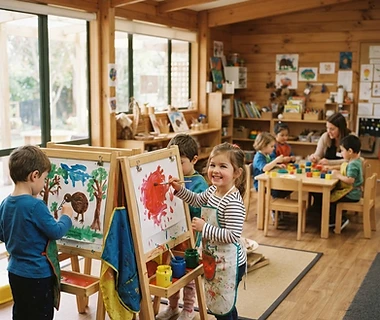
New Zealand has a rich mix of early childhood education (ECE) services, and they're not all the same. Education and care services are the most common — these are licensed, all-day services in a centre. Free kindergartens traditionally run sessional hours for older preschoolers, though many now offer longer days. Playcentres are parent-led cooperatives where families stay and learn alongside their children.
Kōhanga Reo teach in te reo Māori within a Māori cultural setting, nurturing language and tikanga from a young age. Home-based services place small groups of children with an educator in that educator's home. Playgroups are lighter-touch community sessions, often parent-run, and some are license-exempt — meaning they're not subject to the same licensing requirements as fully licensed services.
Knowing the type matters because each has a different philosophy, ratio and cost structure. There's no single 'best' option — the right fit depends on your child's temperament, your hours, your values and your budget.
Te Whāriki: what your child will learn
Every licensed ECE service in Aotearoa follows Te Whāriki, our national early learning curriculum. It's a play-based, holistic framework built on five strands: wellbeing, belonging, contribution, communication and exploration. Crucially, Te Whāriki doesn't test or formally assess children — it guides kaiako (teachers) to notice, recognise and respond to each child's learning.
This means a quality service will talk to you about your child's interests and dispositions, not 'levels' or scores. Ask how the service documents your child's learning journey — most use learning stories or portfolios. A service that can clearly explain how it brings Te Whāriki to life is usually a good sign.
Costs and 20 Hours ECE
ECE isn't free, but most families get significant help. 20 Hours ECE is a government subsidy that funds up to 20 hours a week (up to 6 hours a day) of early learning for children aged three to five. You opt in through your service; some services charge optional fees on top. Younger children may also qualify depending on the service and your circumstances.
Beyond the subsidy, ask each service for a clear fee schedule: what the hourly or daily rate is, whether meals and nappies are included, and what the optional charges are. Home-based and playcentre options are often lower-cost; full-week centre care is typically the most expensive. Work and Income may also help with childcare subsidies for lower-income families.
ERO reviews and quality
The Education Review Office (ERO) regularly reviews every licensed ECE service and publishes reports you can read online. A recent ERO report is one of your best independent sources of information about how a service is actually run — its strengths, any areas for improvement, and how well children are learning.
Don't just look at the headline. Read what ERO says about relationships, the curriculum in practice, and how the service supports children who need extra help. A service that's working openly on improvements ERO flagged is often a healthier sign than one with no recent review at all.
How to choose: visit, ask, trust your gut
Shortlist two or three services near you using our finder tool, then visit each one. You're looking for warm, attentive interactions between kaiako and children, a calm and safe environment, and children who are engaged, not just managed. Notice the ratio of adults to children and whether teachers are qualified — licensed services must meet minimum qualification requirements.
Ask: How do you settle a new child in? What's your adult-to-child ratio? How do you share my child's learning with me? What happens if my child is upset or unwell? Can I drop in any time? A service that welcomes unannounced visits and answers these questions patiently is usually confident in what it does.
Finally, trust your instincts. Your child will spend a lot of time here. The 'best' service on paper isn't always the best for your whānau — the place where you feel comfortable leaving your child usually is.
Rules and requirements change. Confirm current details directly with the official source:
Ministry of Education — Early learningReady to find providers near you?
Answer a few questions and we'll match you to real options in your region.
Which option is right for me?Run an early learning service or education business?
Reach families searching for education options in your area. List your business on Localist and show up where parents are deciding.
Frequently asked questions
At what age can my child start early learning?
What's the difference between a kindergarten and a daycare centre?
Are playcentres and playgroups licensed?
Do I have to send my child to ECE?
How do I find a service's ERO report?
Keep exploring
Which option is right for me?
Answer a few questions and we'll match you to real providers.
Browse all providers on the map
Explore every NZ education provider on one interactive map.
Primary school guide
What comes next after early learning.
Home education guide
Considering educating at home from the start.